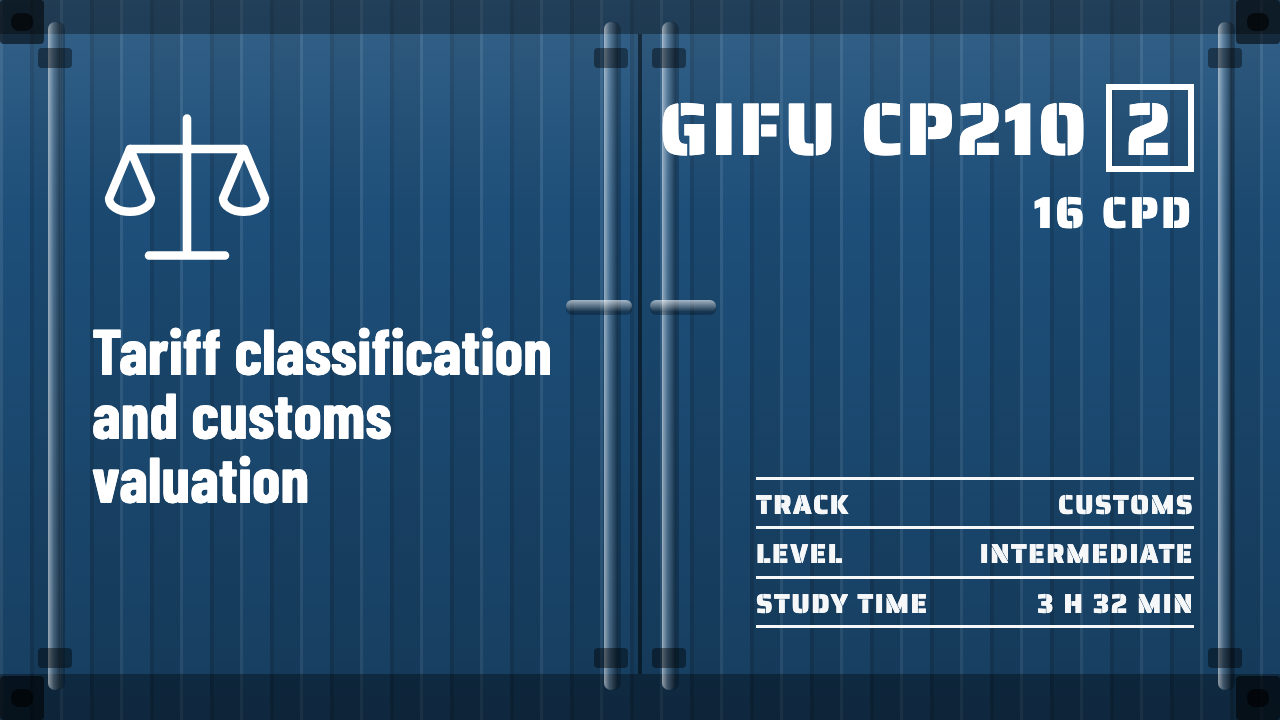
Tariff classification and customs valuation
Classify goods you have never handled before and defend the value you declare, using the same rules a Customs officer applies.

Instructor
Adwoa Mensah-Bonsu
187
Members
enrolled
- Description
- Curriculum
- FAQ
Classification and valuation decide how much duty is paid, and they are where most disputes with Customs begin. Both follow written international rules that can be learned and applied in a fixed order.
This course teaches those rules through worked cases drawn from goods that pass through Tema every week: vehicle parts, mixed consignments, machinery shipped in pieces, and goods sold between related companies.
By the end you will be able to
- Find the right heading for unfamiliar goods using the General Interpretative Rules in order
- Use section notes, chapter notes and the Explanatory Notes as evidence
- Work out the customs value from a commercial invoice, including the additions the law requires
- Recognise when the transaction value cannot be used and which method comes next
- Prepare a written case for a classification or valuation dispute
How the Harmonized System is built
-
1
 Sections, chapters, headings and subheadingsThe tariff is a single book that arranges every tradeable thing from live animals to works of art. Its arrangement is the first clue to where your goods belong.
-
2
The General Interpretative Rules, one to sixSix rules govern every classification. They are applied in order, and most goods are settled by the first.
-
3
Section notes and chapter notesNotes are part of the law. They include things in a chapter, throw things out of it, and define its terms.
Classifying in practice
-
4
Parts and accessoriesParts cause more disputes than any other goods, because the answer depends on the notes to each section rather than on common sense.
-
5
Sets, mixtures and goods shipped in piecesWhat looks like several goods may be one for classification, and the reverse.
-
6
Explanatory Notes and advance rulingsWhen the wording of the tariff leaves doubt, there are two authoritative places to look.
-
7
The bands of the ECOWAS Common External TariffOnce the code is settled the rate follows. The rate bands tell you something about what the tariff is trying to do.
-
8
 Check your understanding: classification
Customs valuation
-
9
The transaction valueUnder the WTO Valuation Agreement, the customs value is first of all the price actually paid or payable for the goods when sold for export.
-
10
Additions and deductionsThe invoice price is rarely the whole customs value. Certain costs must be added if they are not already in it.
-
11
Sales between related partiesA relationship between buyer and seller is not in itself a reason to reject the price. What matters is whether it influenced the price.
When the transaction value cannot be used
-
12
The alternative methods, in orderIf the transaction value is set aside, five other methods are tried in a fixed sequence.
-
13
Used vehicles and other special casesSome goods have their own valuation practice. Used vehicles are the one most forwarders meet.
-
14
Preparing a disputeA disagreement with Customs is won on paper. Arguments at the counter change nothing.
-
15
Final assessment
Which version of the tariff does the course use?
The examples use the structure of the Harmonized System and the ECOWAS Common External Tariff. Codes are revised periodically, so each example tells you how to confirm the current code.
Will this help with the proficiency examination?
It covers the classification and valuation principles tested there, but it is not an examination preparation course.
Course details
Duration
3 h 32 min
Lessons
13
Quizzes
2
Level
Intermediate
Basic info
CP210. 13 lessons, about 3 h 32 min of study. Earns 16 CPD points on completion.
Course requirements
You should already be comfortable lodging a declaration. CP101 covers what you need.
Intended audience
Declarants with at least a year of clearing experience, and supervisors who review declarations.
Popular courses